Flex - Rent On Your Schedule
- 4.7
- Rating
- 1.00M
- Installs
- Free
- Price

 Analysis by App-foxy
Paying rent can be awkward when your paycheck arrives on a different rhythm from your landlord’s due date. Flex is a finance app from Flexible Finance, Inc. built around that exact problem: it lets eligible renters arrange rent payments on a schedule that better matches their cash flow. I found the idea immediately practical, but I also think it needs to be judged as a payment-management tool rather than as a way to make rent cheaper.
The app is free to download and is rated for Everyone, which makes it approachable for a broad audience. Its store summary, “Pay rent on your schedule,” is a fair description of the central appeal, although the real question is whether changing the timing of a large monthly payment is worth the conditions and possible friction that come with using a dedicated service.
How Flex fits into real rent planning
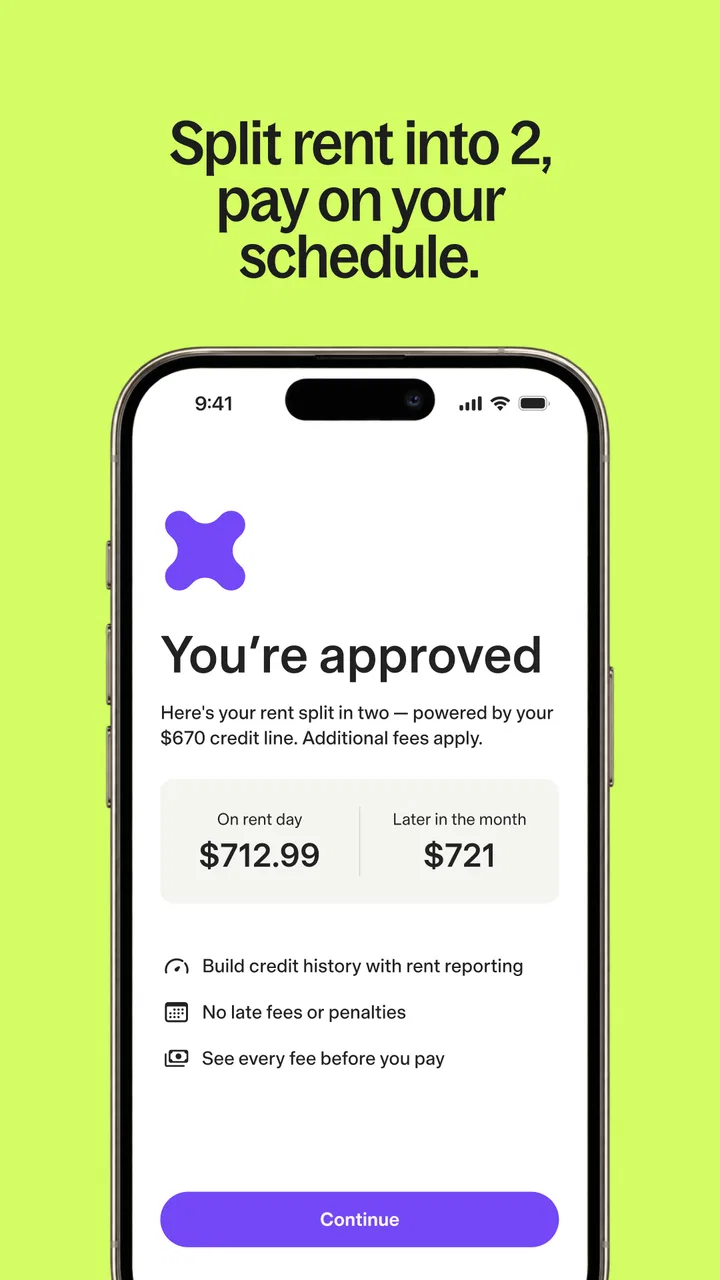
In everyday use, the main benefit is control over timing. Instead of treating rent as one large withdrawal that must line up perfectly with payday, I can see the appeal of arranging payments around the dates when money actually reaches my account. That can be useful for someone paid twice a month, someone whose income varies, or a household where two people contribute at different times.
You May Also Like

 Blood Strike: 2.5 Anniversary
Blood Strike’s Loadouts Turn Every Drop Into a Tactical Gamble
A close look at Blood Strike’s custom loadouts: how fast access to signature weapons reshapes its battle royale rhythm, rewards preparation, and narrows the gap between fights.

 Pandora - Music & Podcasts
Pandora’s Music Is Easy to Start, but Harder to Recover
Pandora’s strength is its low-effort path from a seed to a station. Its weak spot is how much confidence it asks you to place in connection, setup, and quiet recovery.

 8 Ball Pool
 Is Built on Rivalries, Rematches, and Routine
A close look at the rivalries, rematches, shared routines, and unanswered safety questions that turn a quick pool match into a persistent mobile community.

 Samsung Music
’s Quiet Strength Is Playing What You Already Own
Its reach comes less from spectacle than from dependable access to a personal library. That simplicity is both the app’s strongest retention engine and its ceiling.

 AccuWeather: Weather Radar
AccuWeather Review: A Quick, Clear Forecast for Everyday Decisions
For everyday plans, the best forecast is the one you can understand quickly. AccuWeather makes rain timing, radar, and local conditions easy to act on, with a few trade-offs.

 Hill Climb Racing
Why Hill Climb Racing Still Turns Crashes Into One More Run
A tiny car, a bumpy hill and one more upgrade: Hill Climb Racing keeps resurfacing because its simple chaos makes every near-miss feel personal.
More From Our News Desk



A realistic example is a renter whose paycheck lands near the middle and end of the month while rent is due at the beginning. With a normal bank transfer, that person may have to keep a large reserve untouched, move money between accounts, or risk a late payment. Flex is designed to make that timing problem easier to manage. It does not remove the obligation; it changes how the obligation is organized.
That distinction matters. I would not use this app while thinking, “I have found a discount on rent.” I would use it while thinking, “I need a payment schedule that better fits my income.” The value is therefore strongest when timing is the problem and weakest when the rent amount itself is unaffordable.
The app sits in the finance category, but it is more focused than a traditional budgeting app. A budgeting tool usually helps me track spending, set targets, or understand where money goes. Flex addresses one recurring bill and the timing around it. That narrower purpose can be a strength because rent is often the biggest and least flexible payment in a household budget.
What the free download does and does not mean
Flex is listed as free, so there is no purchase price for getting the app itself. That is useful for trying the experience without committing money upfront. Still, free access to an app should not automatically be confused with free rent management. Payment services can involve their own terms, eligibility rules, or costs, and those details deserve careful attention before I rely on the service for a recurring housing payment.
I would read every payment screen and agreement rather than assuming that “free” means there will never be a charge connected with the service. The verified price is the app’s free listing, not a promise that every possible use of the underlying payment arrangement has no cost. For a decision involving rent, that distinction is more important than the download price.
This is also why I would test the setup before the next due date instead of waiting until the last minute. A payment schedule is only helpful if the account connection, property details, and timing all work as expected. Giving myself room to correct an error is a simple but important part of using any rent-payment service responsibly.
Where the app delivers practical value
The strongest value is predictability. When rent can be coordinated with income, I spend less time manually calculating which account should hold money and when a transfer should happen. That can reduce the mental load of a bill that otherwise dominates the monthly budget.
Another useful angle is separating rent planning from general spending. If I keep rent money in the same account as groceries, transport, and subscriptions, it is easy to misread the available balance. A rent-focused workflow encourages me to treat housing as its own priority. Even without replacing a full budget, that separation can make a monthly plan easier to follow.
A less obvious benefit is that the app may be more useful for cash-flow smoothing than for people who simply forget due dates. Someone with enough money but inconvenient paydays has a different problem from someone who lacks enough income for the month. Flex is aimed more naturally at the first situation. If the underlying budget is short, changing payment timing can only postpone pressure rather than solve it.
I also see potential value for people sharing household expenses. When roommates or partners are paid on different dates, coordinating one large rent payment can become a recurring conversation. A scheduled approach may make the responsibility easier to plan, although I would still keep a written household agreement about who contributes what and when. An app should not be the only record of a shared financial arrangement.
The app has earned a 4.7 average from around 94 thousand ratings, with roughly 22 thousand written reviews, and it has passed one million installs. Those figures suggest that many people have found the concept useful enough to rate, but popularity should not replace checking whether the payment model suits my own lease and income pattern.
Small workflow choices that make a difference
My first practical tip would be to map the entire month before activating a schedule. I would note the rent due date, each payday, recurring bills, and the date on which money is actually available rather than merely expected. This reveals whether Flex solves a genuine timing mismatch or simply adds another layer to an already manageable routine.
My second tip is to keep a separate emergency buffer even if the scheduled arrangement appears comfortable. Rent is not the only payment that can arrive unexpectedly. A delayed paycheck, bank issue, or household emergency can affect the plan, so I would avoid treating the app as permission to run my account balance down to zero after each scheduled payment.
A third useful habit is checking the payment status directly instead of relying only on a phone notification. For a housing payment, I want a clear record of what has been arranged, what has been processed, and what still needs attention. I would save confirmations and compare them with my bank activity, particularly during the first cycle.
Finally, I would review the arrangement whenever my lease, income dates, or bank account changes. A schedule that works in one month can become inconvenient after a job change or a move. The app is most valuable when it reflects my current cash flow, not when it is left running without review.
Trade-offs compared with ordinary alternatives
The simplest alternative is paying the landlord directly from a bank account. That route has fewer moving parts and may be best for anyone whose income already lines up comfortably with the due date. Direct payment is also easier to understand: the money leaves one account and reaches the landlord according to the landlord’s established process.
A standard budgeting app is another alternative. It will not necessarily rearrange rent payments, but it can show whether I have enough set aside and help me plan around the bill. If my real problem is overspending, irregular subscriptions, or a lack of savings, a budgeting tool may deliver more lasting value than a rent-timing service.
Automatic transfers are a middle ground. I can schedule money to move into a rent account after each paycheck, then pay the landlord from that account. This can solve the same timing problem without introducing a specialized rent service, although it requires me to manage the setup and make sure the landlord accepts the chosen payment method.
Flex becomes more attractive when I want a purpose-built rent workflow and do not want to build that system manually. The trade-off is dependence on another service for an essential bill. If something goes wrong, I may need to coordinate among the app, my bank, and my landlord instead of dealing with only one payment channel.
That extra layer is the main limitation I would keep in mind. Convenience is valuable, but rent is a high-consequence payment. I would not assume that a successful setup means every future payment will be effortless. I would continue checking balances, dates, and confirmations, especially around holidays, job changes, or unusual income periods.
Who is likely to get the most value
Flex makes the most sense for renters with reliable income that arrives at inconvenient times. It may also suit people who receive multiple paychecks, combine income with a partner, or want a clearer way to divide a large monthly obligation across their cash-flow calendar.
It can be particularly helpful when the alternative is repeatedly moving money manually and worrying about whether the rent account will be ready. In that situation, the convenience is not just cosmetic. A predictable routine can reduce missed steps and make the monthly budget less stressful.
I would be more cautious if my income is highly uncertain, if I frequently lack enough money for the full month, or if I am already struggling with several payment obligations. A scheduling tool cannot turn insufficient income into sufficient income. It may make the immediate month look easier while leaving the larger financial problem untouched.
I would also skip it if my direct landlord payment is simple, dependable, and already aligned with payday. In that case, adding a separate service may offer little practical improvement. The free download makes experimentation easier, but my time and attention are still costs, and I would not create another financial routine without a clear benefit.
Version, compatibility, and everyday usability
The current version is 3.39.0, and the app supports Android 7.0 or later. That gives it a reasonably broad reach for people using older Android phones, although I would still keep the operating system updated when possible because finance apps handle information that deserves careful protection.
As an Android finance app, it is best approached with the same care I would give any tool connected to rent payments. I would use a secure device lock, avoid setting it up on a shared phone, and verify that the account information shown in the app matches my own records. These are sensible habits for financial software, not reasons to avoid this particular product.
The Everyone age rating makes the app broadly accessible, but age suitability does not answer the more important question of financial suitability. A young renter, a student, or a first-time tenant may still need help understanding the lease, payment deadlines, and household budget before relying on a scheduled payment system.
My buy-or-skip verdict
I would recommend trying Flex when the specific pain point is rent timing. Its free listing lowers the barrier to testing the workflow, and the focused purpose is more relevant than a general money tracker for someone whose biggest issue is aligning rent with paydays.
I would not recommend treating it as a substitute for budgeting, emergency savings, or honest affordability checks. The app can organize a payment obligation, but it does not make that obligation smaller. I would also compare its complete payment terms with the cost and effort of direct transfers or an automatic rent account before making it part of a permanent routine.
My overall view is positive but conditional: Flex is most useful as a cash-flow tool, not as a rent discount. If direct payment already works, stay with the simpler option. If rent timing repeatedly creates avoidable stress despite having enough income, this app is worth investigating. Flexible Finance, Inc. has built a focused answer to a common problem, and the best results will come from using it deliberately, checking each cycle, and keeping the wider household budget in view.
FAQs for Flex - Rent On Your Schedule
01What is Flex - Rent On Your Schedule?
Flex is an innovative app designed to help users manage their rent payments more flexibly. Instead of being tied to a traditional monthly schedule, Flex allows users to break their rent into smaller, more manageable payments that align with their income schedule. This can help reduce financial stress and improve budgeting.
02How does Flex help with rent payments?
Flex allows users to customize their rent payment schedule by dividing the total rent into smaller installments. Users can choose to pay weekly, bi-weekly, or on any schedule that suits their financial situation. This flexibility helps users avoid late fees and manage their cash flow more effectively.
03Is Flex safe to use for rent payments?
Yes, Flex prioritizes user security by employing robust encryption and data protection measures. The app ensures that all transactions are secure and compliant with industry standards. Additionally, Flex partners with reputable financial institutions to facilitate smooth and secure payment processing.
04Are there any fees associated with using Flex?
Flex does charge a small convenience fee for its service, which is clearly outlined during the setup process. This fee covers the cost of splitting and managing payments. Users should review these fees before signing up to ensure it fits within their budget.
05Can I use Flex for any type of rental property?
Flex is designed to work with most residential rental properties. However, it’s important to check whether your landlord or property management company is compatible with Flex. The app provides a simple way to invite landlords to join the platform if they are not already participating.
Pros
- Customizable payment schedules.
- User-friendly interface.
- Automated reminders.
- Secure payment processing.
- Wide range of supported landlords.
Cons
- Limited customer support.
- Fees for certain services.
- Requires bank account linking.
- Not available in all regions.
- Potential privacy concerns.

Flex - Rent On Your Schedule
Gallery